
Patents & Sensor Networks
Two issued U.S. patents on the same core idea, years before "edge AI" had a name: do the hard signal processing at the sensor, on very little power, and send only the answer.
Self-assembling wireless network for railroad wheel and bearing monitoring
An undetected failing wheel bearing can derail a train, and wayside detectors see each bearing only when it passes. This system puts a self-powered sensor node on every wheel and lets the train build its own network.
In the 2023 East Palestine, Ohio derailment, the NTSB found that an overheated wheel bearing caused an axle to separate. Continuous on-board monitoring of every bearing is designed to catch that kind of temperature rise early.
A network that knows its own train
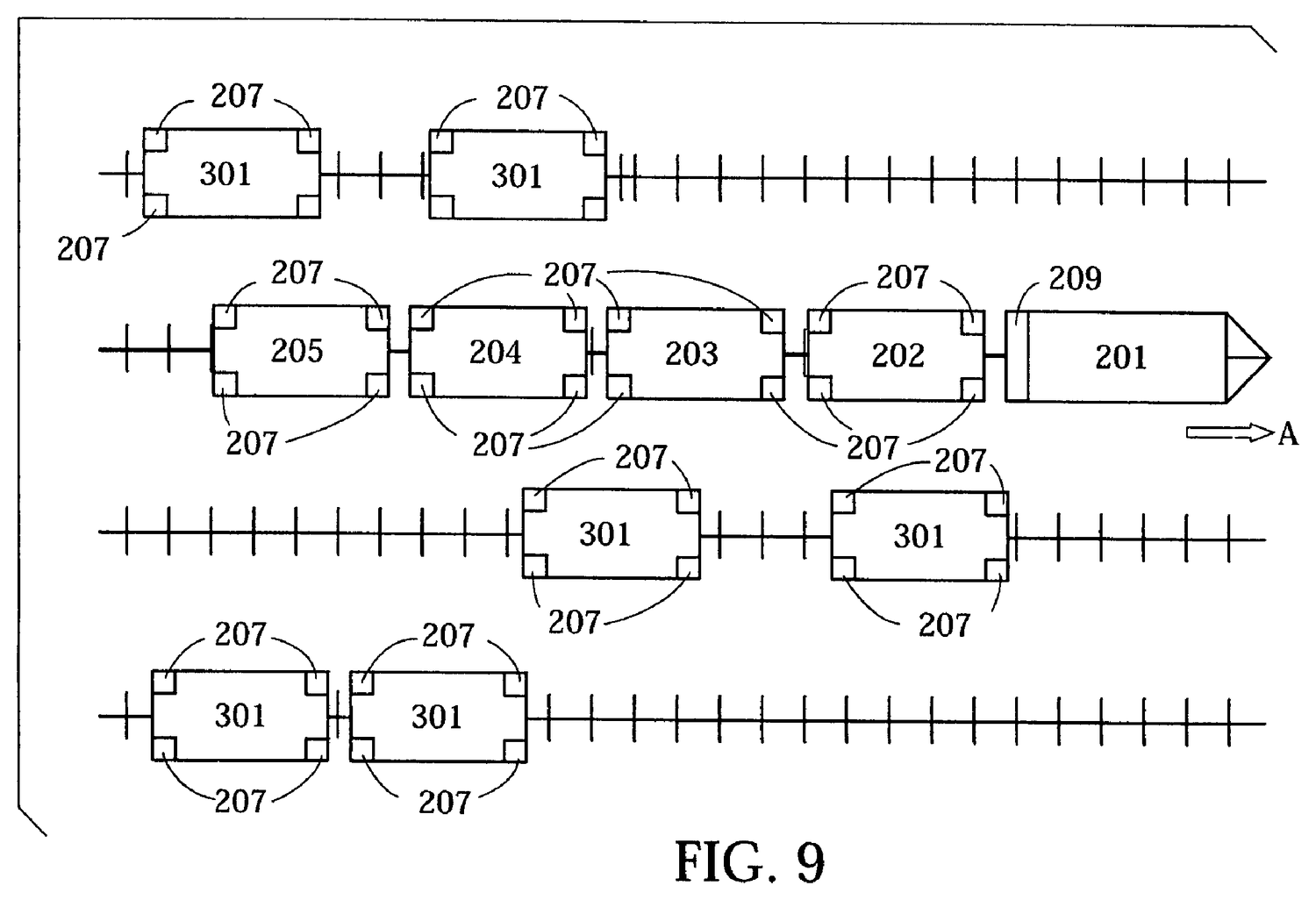
Cars in a rail yard are close enough to hear each other. Membership is decided by physics: only nodes sensing a common velocity and acceleration join, so parked cars and neighboring trains stay out.
Send the result, not the data
High-rate sampling and signal processing stay on the node. Only low-bandwidth results cross the network, which lets a low-power radio such as ZigBee do the job.
No batteries to change
A generator driven by the wheel's rotation powers the node, and a supercapacitor carries it through short stops. The design goal was ten or more years of service.
Technical details from the patent
- 16 bearing-related frequencies, each with four adjacent bins above and below to allow for slip and speed variation: 144 lines in all
- Sampling tied to wheel rotation, so that defect frequencies stay aligned as speed changes
- Time-domain peak, RMS, crest factor and kurtosis alongside enveloped frequency-domain analysis, tracking the stages of bearing failure
- Also detects catastrophic lubrication failure from temperature, wheel impacts, and truck hunting from lateral acceleration
- FIG. 20 of the patent shows on-railcar data in normal operation: the temperature sensor resolved small changes with train speed, providing the accurate trend needed to spot a rapid rise
- A node that senses a value above a trip level can wake its neighbors and begin assembling the network
Inventors: Gerard A. Barone (first named), Jason O. Breitfeller, David Andrew Jacobs, Charles W. Nyquist, Roger E. Rose, Jr. Assigned to L-3 Communications Corporation. Read the full patent and figures.
Detecting events from their vibration signatures
A sealed shipping container carries vibrations too small to feel. The challenge is that many ordinary sources produce signals as large as the one you care about, so a simple threshold floods you with false alarms.
A library of signatures
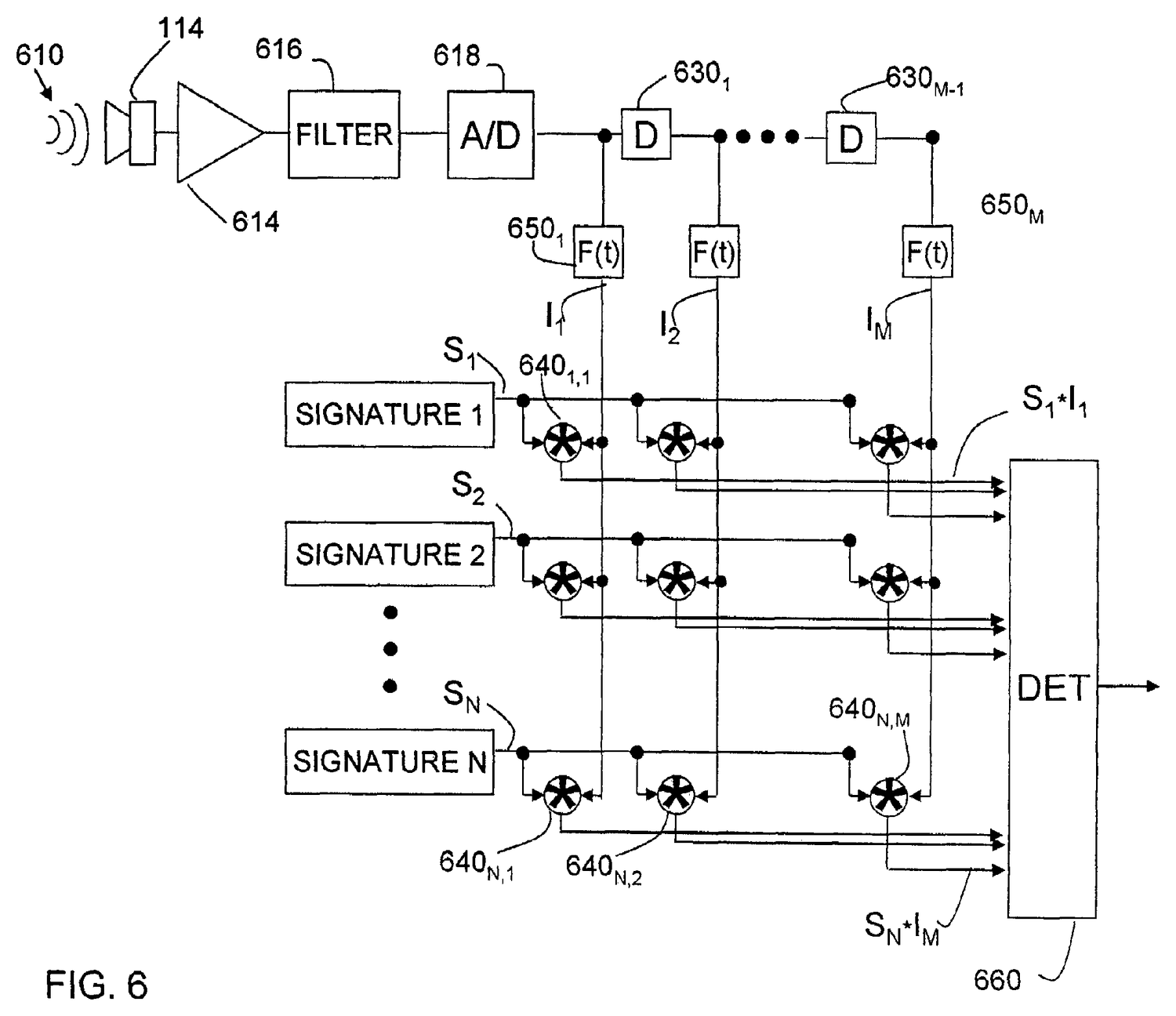
Instead of one threshold, each portion of the signal is compared with many stored signatures, each the frequency spectrum of a known event. It's pattern recognition built for a low-power device.
Reprogram by changing the library
The same hardware detects different things with different signatures, such as the beat pattern of a concealed person's heart, or a container wall being pierced.
Built for transit
A low-power processor wakes periodically on battery, logs any event during the trip, and reports at a security checkpoint.
Inventor: Gerard A. Barone. Originally assigned to L-3 Communications Security and Detection Systems. Read the full patent and figures.
The same ideas, carried forward
Vibration & modal analysis
Normalizing spectra to rotation rate, first applied to wheel bearings, extended to the far harder case of a V8 engine.
Signal conditioning
The analog discipline behind both patents, applied from ultrasonics down to 20-microvolt brainwaves.
Wearable AI
Fast work on the device and heavier analysis elsewhere: the same split, now with frontier vision AI.
Need sensing that works in the field?
I've taken low-power sensor systems from concept through demonstration on real equipment.
Start a conversation